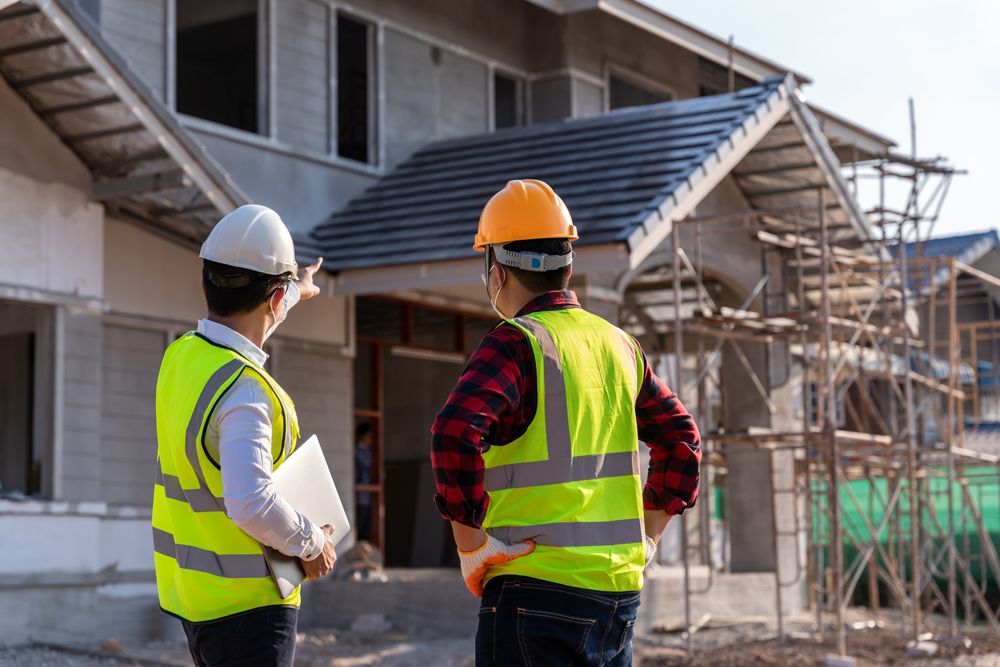
Custom Home Builders vs General Contractors – What's the Difference?
This is the case that happens more frequently than you would imagine.
Someone will save months, or even years, and then purchase a strip of land and begin to fantasize about what he or she will construct there. They're excited. They Google a few things. And within about fifteen minutes, they're completely confused about whether they need a custom home builder or a general contractor.
Both sound similar. Both build things. Both show up with crews and equipment. But hiring the wrong one? That would cost you tens of thousands of dollars, months of waiting, and a lot of headaches you were not supposed to be involved in.
So, let’s get this out of the way once and for all, no jargon, no fluff, and a plain answer to a question which, oddly enough, is fairly poorly explained by most of the sites out there.
What Do Custom Home Builders Actually Do?
The custom home builder is a term loosely used in the construction industry. Developers slap it on brochures even when all they're offering is a choice between three countertop colors. That's not custom. That's a sales tactic.
A real custom home builder builds your home around your life, your routines, your family, your quirks, and your wish list. They start with either a blank sheet of paper or your rough sketches and help turn that into an actual structure you'll live in for decades.
What sets them apart is that they're involved from the very beginning. We're talking design conversations, site evaluation, permit navigation, subcontractor management, materials sourcing, all of it. When the design is complete, you are not passed on to a project manager. The ones to make sure that the framing crew does not cut corners are the same people who assisted you in determining where your windows are supposed to face.
A lot of custom home builders also operate in the luxury segment, which means they've already navigated the complicated stuff, imported materials, smart home integrations, unusual architectural shapes, and they know how to execute without everything falling apart mid-build.
If you've ever had a contractor give you that slow, uncertain nod when you describe something slightly unconventional... You know why specialization matters.
So What Does a General Contractor Do?
A general contractor is, at their core, a project manager with deep trade connections.
They know the best plumbers in town. They know which electricians actually show up on time. They can pull together a crew fast, keep a job site moving, and make sure things don't go sideways between subcontractors. That's genuinely valuable, and not easy to do well.
But here's the thing most people don't realize: a general contractor typically steps in after the design work is already done. You bring them the plans. They execute the plans. The design decisions? Those are on you and your architect.
GCs also tend to work across a much wider range of projects, including kitchen remodels, commercial buildouts, home additions, and basement finishes. That versatility is great for certain jobs. For building a custom home from scratch? It's often not the right fit because the skill set required is different.
Think of it this way: a general contractor is like a highly skilled chef who can cook from any recipe you hand them. A custom home builder is the chef who also helps you develop the recipe in the first place.
The Real Differences, Side by Side
This is where it gets practical.
| Custom Home Builder | General Contractor | |
|---|---|---|
| Starts with | Your vision | Your blueprints |
| Design involvement | High, they help shape it | Low, they work from it |
| Best suited for | New custom builds | Remodels, renovations, pre-designed builds |
| Client relationship | Ongoing throughout | Mainly during construction |
| Manages subs? | Yes, with residential focus | Yes, across many project types |
| Luxury experience | Often yes | Depends on the GC |
| Timeline | Longer (design + build) | Varies by project scope |
When Does a Custom Home Builder Make Sense?
A few clear signs you need a custom home builder:
You're starting with land and a vision, not a floor plan. If what you have is a lot and a list of things you've been wanting your whole life, that's custom builder territory. They help translate the wishlist into a blueprint.
Your requirements are specific. Maybe your mother-in-law is moving in and needs her own entrance. Maybe you work from home and need serious soundproofing. Maybe you've always wanted a screened-in back porch that connects directly to the kitchen. General contractors don't typically help you think through these things, but custom builders do it every day.
A few clear signs you need a custom home builder:
You want a luxury-level build. There's a difference between a builder who's heard of imported stone and one who's actually installed it properly and knows which suppliers are reliable. Luxury home builders have that experience. It's not just about spending more money; it's about knowing how to spend it right.
If this sounds like your situation, it's worth looking at what experienced custom home builders have built before and talking to a few of them before you make any decisions.
When Should You Go With a General Contractor?
GCs are genuinely excellent for a lot of situations, just not all of them.
You probably want a general contractor when:
- Your plans are already drawn up by an architect and ready to execute
- You're doing a significant renovation, a kitchen gut, an addition, a full bathroom remodel
- You're building from a pre-designed plan (like a catalog home or developer model)
- You need someone who can work across both residential and commercial scopes
- Your project is defined, with a definite scope, and you only require someone to run the build.
The point is that, when you know exactly what you want and have the drawings to illustrate it, a GC can be moved effectively and at a reasonable price. They don't need to hold your hand through the design process, and you're not paying for that service.
Let's Talk About Money
Nobody wants to, but we should.
A standard custom home construction usually costs between 300 and 500+ per square foot in the majority of markets in the United States, and high-end construction may easily exceed that based on the finishes and complexity. And that is a good price to pay, and it is, but you are really paying to be an owner of something really yours. No compromises were baked in because a developer needed to hit a price point.
General contractors can be more economical on defined projects because the scope is clear and they're not billing for design time. A renovation or pre-planned build with a GC can come in significantly under what a custom build costs.
But here's the honest math: how much does it cost to buy an existing home, hate two rooms, redo the kitchen three years later, and eventually move anyway because it never quite worked? Spread that out over ten years, and the "more expensive" option sometimes ends up being the practical one.
Value isn't just sticker price. It's whether you actually get what you need.
Pros and Cons, Honestly
Custom Home Builders
What's great:
- You're involved in every meaningful decision
- One team managing design, permits, construction, and finish work
- Built specifically for how your family actually lives
- Strong fit for complex or high-end projects
- Less chance of "I wish we'd done that differently" regret
What's harder:
- Costs more and takes longer; there's no getting around it
- Requires you to make a lot of decisions (some people find this exhausting)
- Fewer builders at this level, so vetting takes time
- Not the right tool for remodels or smaller scoped work
General Contractors
What's great:
- Fast to mobilize on well-defined projects
- A broad trade network means flexibility
- More economical for renovations and additions
- Great at executing when the plan is already solid
What's harder:
- They need a plan; they can't help you build one
- Less specialized in new custom residential construction
- You'll coordinate your architect separately
- Experience varies wildly, and quality control depends heavily on who you hire
Three Real Scenarios That Show the Difference
The Pellegrinos purchased three acres outside of Austin and are looking to construct a four-bedroom house with a separate casita to house the parents of Rosa, a home gym, and a kitchen large enough to cook serious meals on Sundays. They have never constructed and do not know what to do. They require a personal home builder, someone who will assist them in taking that dream from talk to construction plans to a completed house.
Derek has a 1940s bungalow in Denver, which he has been converting room by room. His architect friend has just completed the plans for a complete master suite addition.
Derek doesn't need a visioning partner; he needs someone to execute a set of drawings efficiently. A general contractor is exactly right for this.
The Okafor family has been saving for their forever home for eight years. They want something that reflects their taste, real hardwood, custom millwork, and a layout that actually makes sense for how they entertain. Nothing they've toured in their price range comes close. They're ready to build, and they need luxury home builders who've done this before and can deliver at that standard without excuses.
Why More People Are Choosing to Build Custom
The existing housing market has put a lot of people in a tough spot. Low inventory. High prices. Homes that were built fast and cheap during the boom years are now showing their age. The experience of touring thirty houses, none of which are quite right, and then overpaying for the least-bad option, has pushed a lot of buyers toward building instead.
But it is not only a response to the market conditions. The needs of people have really evolved. Remote work does not imply a closet conversion, as you require actual office space. Multigenerational is in; families are constructing houses that can house parents or adult children without making each other insane. Sustainability is not merely as important as before, and residential construction firms that focus on custom construction can incorporate energy efficiency, solar-friendly designs, and superior materials at the outset instead of including them later on.
Building custom is no longer just for the ultra-wealthy. It's become a practical choice for anyone who's thought carefully about what they actually need and decided that "close enough" isn't good enough.
Wrapping Up
The decision between a custom home builder and a general contractor usually isn't that complicated once you know what each one actually does.
Building something new, from scratch, tailored to your life? You want a custom home builder. Renovating, remodeling, or executing a pre-designed plan? A general contractor is likely your match.
What matters most is that you don't hire the wrong one for the job. Asking a GC to guide you through a ground-up custom build is like asking a great line cook to run a full catering operation; they might manage, but it's probably not going to go as smoothly as you'd hoped.
If you're leaning toward building something truly yours, start by looking at what dedicated custom home builders have already built. Let the work speak. Ask questions. Take your time choosing.
The right builder makes all the difference, and the home you actually want is worth building right.
FAQs
Q: Can a general contractor build a custom home?
A: Some can, technically, if they have residential new construction experience, and you come with complete architectural plans. But a builder who specializes in custom residential work will almost always deliver a better result.
Q: What's the difference between a custom and a luxury home builder?
A: A custom home builder will apply to your specifications, no matter your budget. The luxury home builder is usually operating at the higher end of the market - high-quality materials, complicated design, high finishes, etc., and has certain experience in doing so. All luxury builders are custom builders, but not all custom builders work at the luxury level.
Q: Do I have to employ my own architect when using a custom home builder?
A: There are a lot of custom builders who either possess internal design services or collaborate with architects they have been doing business with over time. You might not need to go out of your way to find one by asking.
Q: What is the length of time a custom home takes to build? Realistically?
A: Typically, most custom homes take 12 to 24 months to construct from first design discussion to move-in. Large or complicated constructions are time-consuming. Give yourself time to budget, and you will not regret it.
Q: What makes a good custom home builder?
A: Interview their former clients - not those they give you on a reference list, but those that you locate on your own. Visit finished houses, where possible. Inquire how they deal with the budget overruns and delays, as these discussions tell a lot. A builder who gets defensive or vague is a red flag.
Q: Does it really make sense to custom-build?
A: Yes, to most of those who do it. You get what you need, it is constructed to the current codes using modern materials, and you save renovation expenses associated with purchasing an old house that does not suit. The initial price is actual, yet so is the value in the long term.
SHARE THIS POST